best Indian-style fried rice
October 30, 2026 • 4 min read
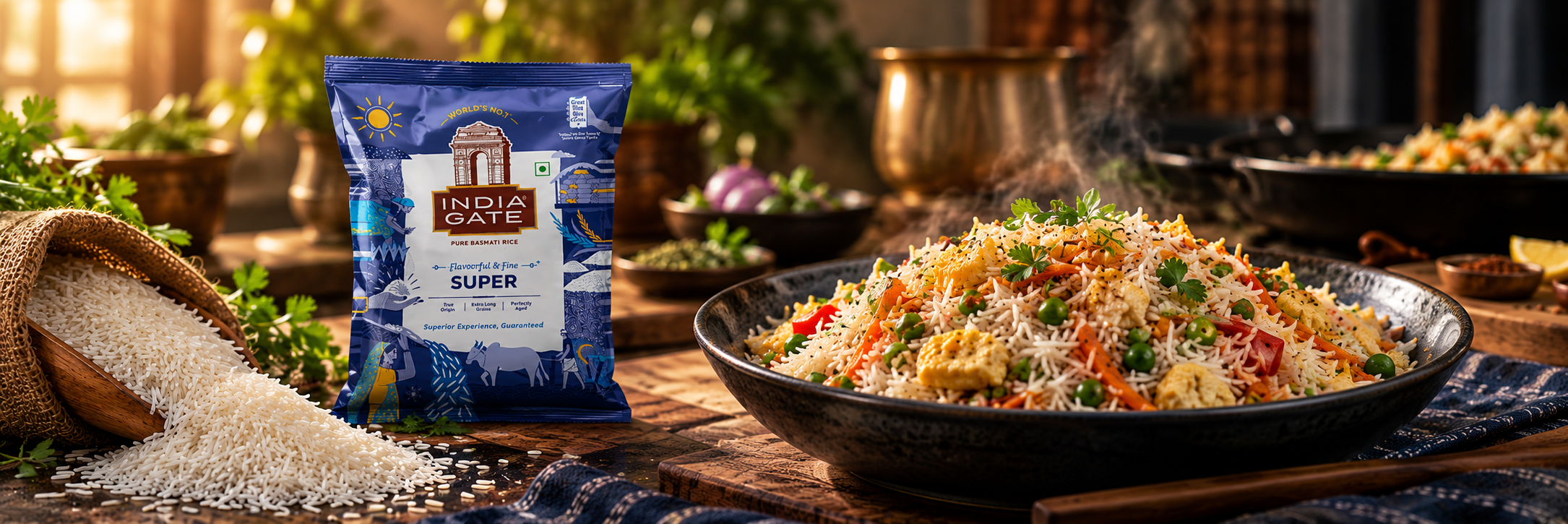
Clumpy fried rice is almost never the wok's fault. It is the rice, or how wet it still was when it hit the pan. Pick the right grain and prepare it properly, and restaurant-style fried rice becomes a weeknight dish.
KEY TAKEAWAYS
- Long-grain basmati gives the most separate grains for Indian-style fried rice.
- Short, starchy rice tends to clump in a hot pan.
- Cooled, refrigerated rice fries better than freshly cooked rice.
- Cook the rice with slightly less water if it is meant for frying.
Which Rice Is Best for Fried Rice?
Long-grain basmati is the best rice for Indian-style fried rice because its grains stay separate and firm in a hot pan. Jasmine suits Thai-style fried rice, with a slightly softer bite. Short-grain rice such as Sona Masoori or Kolam releases more starch and tends to clump when stir-fried.
The twist most recipes skip: you don't need day-old rice. You need dry rice. Freshly cooked rice, spread out and cooled until the surface dries, works almost as well.
India Gate Foods also makes a long-grain rice built for the wok, called Unity Fried Rice. More on it in the last section.
Which Rice Works, and Which Doesn't?
| Rice | How It Fries | Best Suited To |
|---|---|---|
| Raw long-grain basmati | Separate, light, aromatic | Indo-Chinese veg or egg fried rice |
| Steam basmati | Firm, holds shape | Larger batches |
| Sella basmati | Very firm, slightly chewy | Bulk or restaurant-style batches |
| Jasmine | Slightly soft, fragrant | Thai-style fried rice |
| Short-grain (Sona Masoori, Kolam) | Soft, tends to clump | Better used for other dishes |
The pattern is simple: the more starch a grain gives up while cooking, the more it sticks in the wok. Long grains hold their starch inside. Short grains share it with their neighbours. Our guide to long grain vs short grain rice explains the difference, and the Sella basmati explainer covers why that variety stays so firm.
Most people get this wrong: Frying rice straight from the cooker. Hot, fresh rice is full of steam, and steam is what glues grains together in the pan.
Why Does Cold Rice Make Better Fried Rice?
As rice cools, moisture leaves the surface of each grain and the starch firms up. Firm, dry grains separate easily and take on colour in the pan. Warm, wet grains smear into each other and steam instead of frying.
That is the real logic behind the day-old rice rule. It is about moisture, not age.
Cooked rice needs careful handling, so cool it quickly and refrigerate it promptly rather than leaving it on the counter. For safe storage limits, follow our guide on storing and reheating cooked rice safely.
How Should You Cook Rice Meant for Fried Rice?
- Rinse the rice until the water runs mostly clear. This removes surface starch. Here is why washing rice matters.
- Cook it with slightly less water than you would for a plain meal. You want grains that are cooked through but firm. For basmati, the step-by-step basmati cooking guide covers the method.
- Spread the rice on a wide plate or tray in a thin layer so steam escapes.
- Refrigerate it if you are not frying soon. If you are, let it sit until the surface feels dry to the touch.
- Break up any clumps with your fingers before it goes into the pan.
- Fry on high heat, in small batches, so the rice sears rather than steams.
A crowded pan drops the temperature, and a cooler pan means soggy rice. Two small batches beat one large one. If grains still turn mushy, why rice turns mushy or sticky covers the usual causes.
Which Rice Should You Choose?
Your choice depends on the situation:
- Quick fried rice from fresh rice: Use long-grain rice and dry it on a tray first. India Gate Unity Fried Rice is the simplest pick. India Gate describes it as firm, low-starch grains made for high-heat wok cooking, with a post-cook length of 18 mm.
- Leftover-rice fried rice: Any long-grain rice that has been refrigerated works well.
- Party batch: Sella basmati, such as India Gate Golden Sella Tibar, holds its shape through large-quantity tossing.
- Thai-style: Jasmine, cooled the same way.
Still deciding which basmati to stock for everyday cooking? See which basmati rice is best for cooking.